Köln
In a genuine Cologne pub, only the completely clueless or pronounced danger seeker would have the audacity to order an Alt beer. According to legend, the competitive relationship between Cologne and Düsseldorf stems from the "Battle of Worringen". This has been cultivated since 1288, currently expressed with pleasure during the Rhineland Carnival (because Düsseldorf's Fortuna do not play first-class anymore) and documented (among others) in a detailed Wikipedia entry. If their FC wins five games in the series, the people of Cologne think championship. A touch of grandeur hangs over the city, which has been important since Roman times, in which said megalomania is probably rooted. This, of course, does not come across as unsympathetic. The conclusion of an image-research from 2002 was that relevant image aspects of the city are equally positively evaluated by the people of Cologne as well as by non-Cologne inhabitants. Certain qualities though, such as Cologne as media city, for example, the people of Cologne assess more positively than non-Cologne people.
Wolfgang Kienast
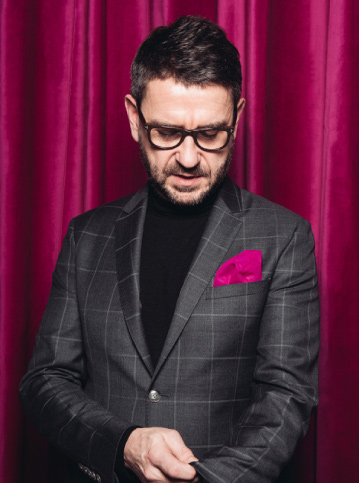
Achim Schmitz
It’s easy for the girls: little white angels are fluttering around Achim Schmitz. And while other boys arrived in blue for their first communion, he wears a brown corduroy suit, a beige shirt, a brown ...
Read more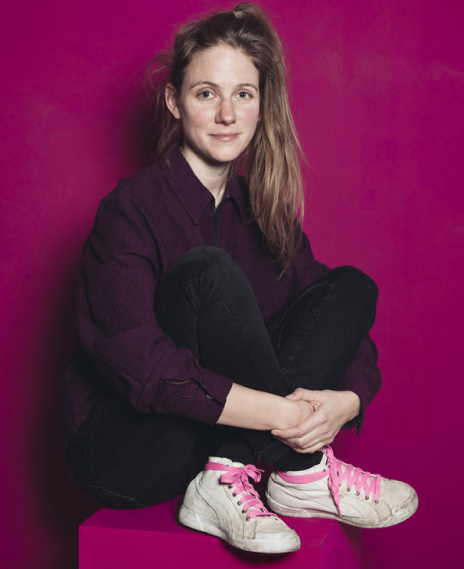
Lena Schröder
„The term ‚upcycling‘ totally fucked up!“ says Lena Schröder. But the stereotypes sticks to the designer because she does not obtain the textiles for her Trinkhallen Schickeria collection from retail partners, but ...
Read more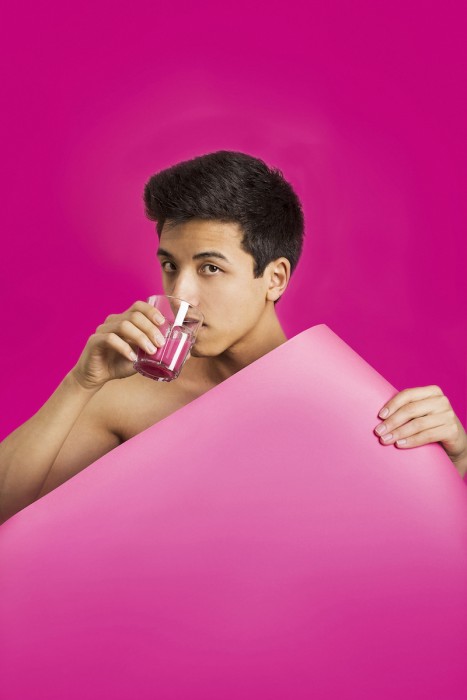
Nathan Ishar
As a child of the Ruhr area, the learned jurist moved from Bochum to Cologne. There, Nathan Ishar dedicates himself to his two biggest passions: third-wave coffee and photography – presumably, every day in this order. ...
Read more
Sabine Voggenreiter
Cologne is a furniture city and Sabine Voggenreiter is partially guilty of that. In 1989 she invited Cologne-based designer, furniture stores, design galleries and universities and connected them with international manufacturers and designers. Although they did not ...
Read more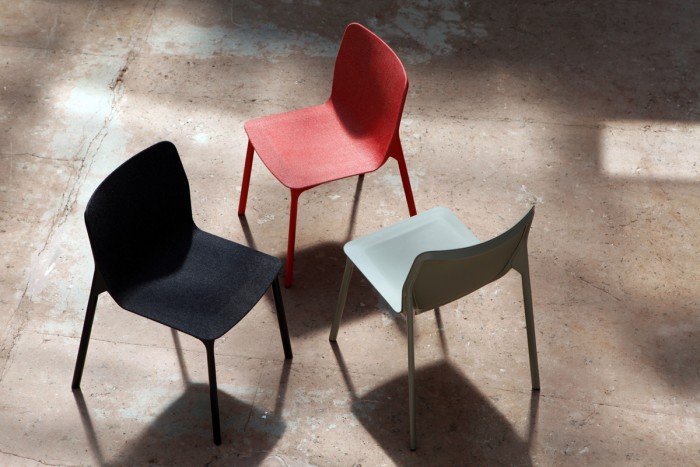



Makk
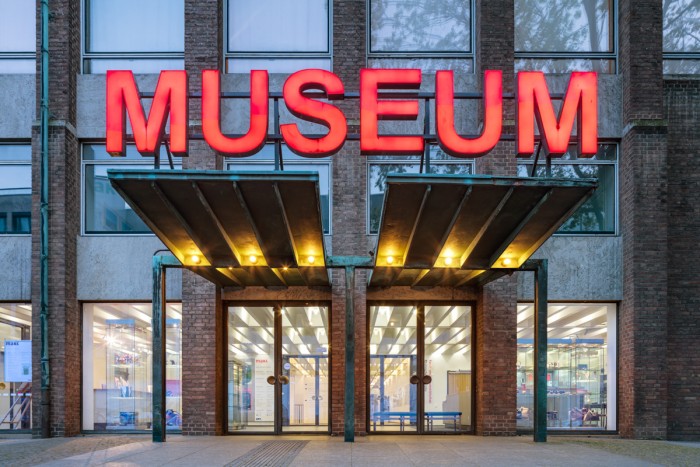
Some of the design objects in the MAKK became objects of desire immediately after they had been created – and still are: The Mercedes SL, the Eero Aarnio ball-chair and the Alessio Kitchen utensils for example. For others, it took decades before they were seen as icons of design, such as the Braun stereo system, the Swiss pocket knife or the first Macintosh - which already contained the later iMac worlds and iPhone logic, as we know today. This part of the MAKK is curated by the creators of the Vitra Design Museum in Weil am Rhein and includes the key design works of the 20th century, devided over two floors: furniture, lamps, telephones, TVs, cameras, radios, household appliances, cutlery, vases. The MAKK shows the classics, designed for example by Charles and Ray Eames, Dieter Rams, Frank Lloyd Wright, Philippe Starck, Ettore Sottsass, Stiletto and Joe Colombo, next to everyday objects of today's nameless inventors and designers - a total of 120.000 objects from 800 years of European art and craft work. In special exhibitions, the MAKK presents design objects from their collection next to art, in order to pursue the still unsolved question: "Where does art end, where does design begin - and vice versa?" The focus of their art collection lies on the constructive, geometrical and concrete form language of for example De Stijl, Bauhaus and the Russian avant-garde, with works by Piet Mondrian, Man Ray, Oskar Schlemmer, and Alexander Rodtschenko. The separation between everyday objects of use and functionless works of art, between mass-produced and unique items, in anyway appears odd with regard to artists such as Marcel Duchamp, Andy Warhol and Damien Hirst or with regard to Haute Couture. Modern art transforms everyday objects through alienation in art. Visitors can study the connecting lines between beauty and functionality in thousands of objects in the MAKK, while at the same time encountering the centuries-old history of design and technology - and some things from their own home.
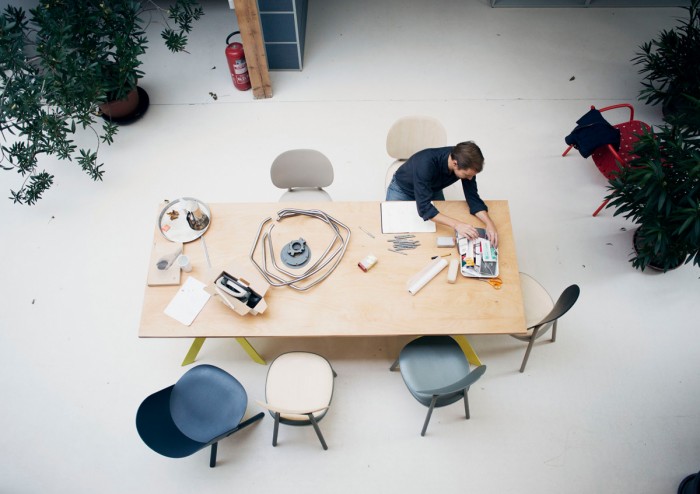
FULL HOUSE: Design by Stefan Diez
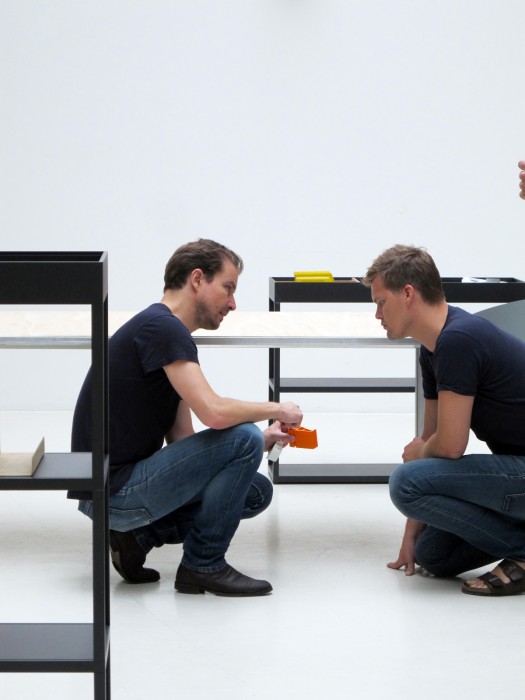
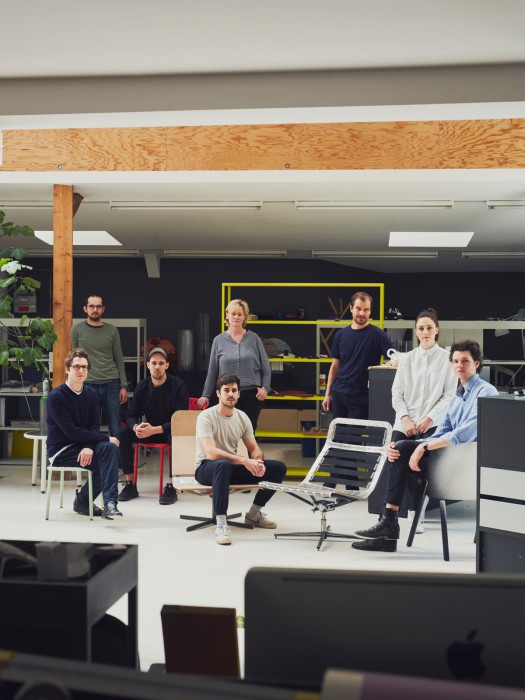
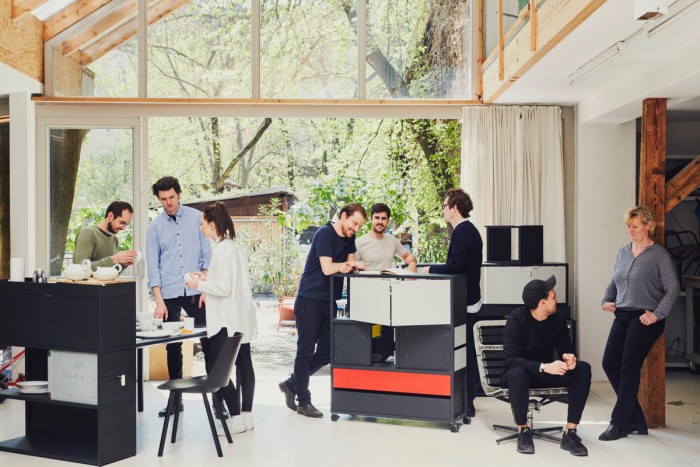
MAKK features with this comprehensive exhibition the work of one of Germany’s most important new -generation designers. The solo exhibition provides a detailed view into the workshop of Munich-based designer Stefan Diez, showing his design approach and explaining key moments in the development processes of furniture, luminaires, accessories and other everyday products. 17. Januar – 11. Juni 2017
Autor: Christian Caravante
Foto: Constantin Meyer Photography
An der Rechtschule
50667
http://www.museenkoeln.de/museum-fuer-angewandte-kunst


Ökorausch
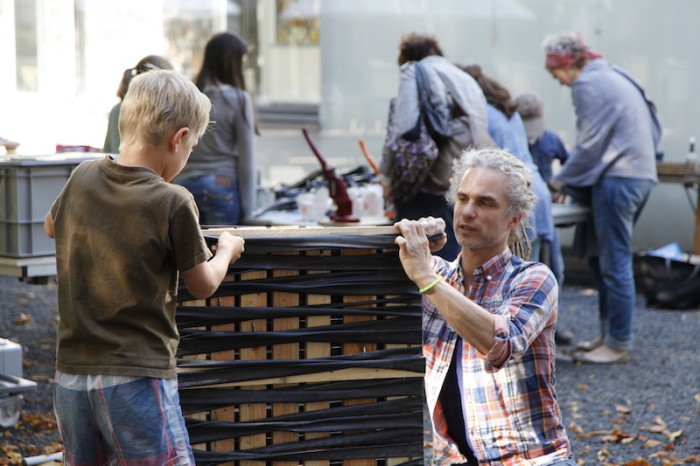
The ökoRAUSCH festival for design and sustainability is a design festival with attitude. It stands for intelligent design that puts people, society and the environment first. Exciting new concepts can be found where art and design meet, paving new paths for innovative future strategies. The 2017 ökoRAUSCH festival will take place in Coogne at the Museum für angewandte Kunst Köln (MAKK) from 12 to 21 May.
Sustainability needs creativity
At the heart of the festival is an exhibition focussing on premium, sustainable products, innovative design concepts and artistic positioning in the interest of sustainable development. In order to liven up the message of the relevance of sustainability, the term sustainability itself depends on the skills of the designers and artists. With fun methods, intelligent approaches and unconventional ideas, these designers and artists are proving their talent and at the same time are connecting design with purpose.
Besides presenting people from the design scene and their work, we will be offering a diverse programme with contributions from design, art, the sciences, economy and politics – continually reflecting on the leitmotif of sustainability – sources of inspiration and links to sustainable economic activity, eco-political engagement, social equity and cultural diversity. The interaction between the different disciplines, and especially the connection with art with regards to sustainability related content, will not only be enriching for the festival, it will offer the participants a change of perspective. By presenting all of the connecting factors, such as (creative) industries, science and politics, the ökoRAUSCH Festival will attract specialists in their own right as well as a large public audience. With an annual number of visitors reaching up to 3,000 people the festival format has proven that design plays an important role as a medium and driver for a socio-economic transformation in society.
Autor: Dunja Karabic
Fotos: Bozica Babicund Georg Valerius
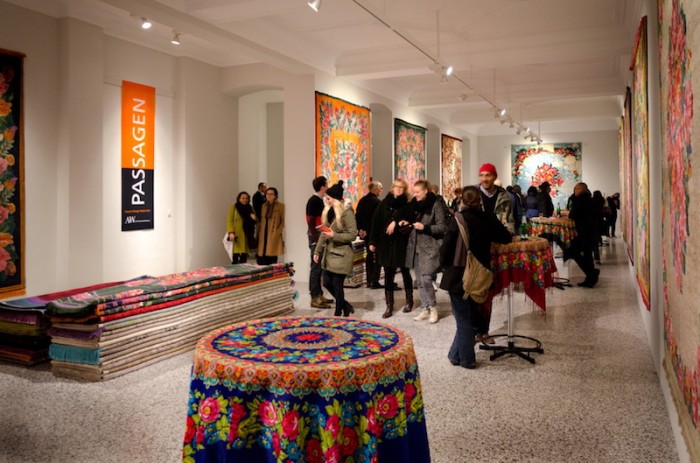
Passagen und IMM
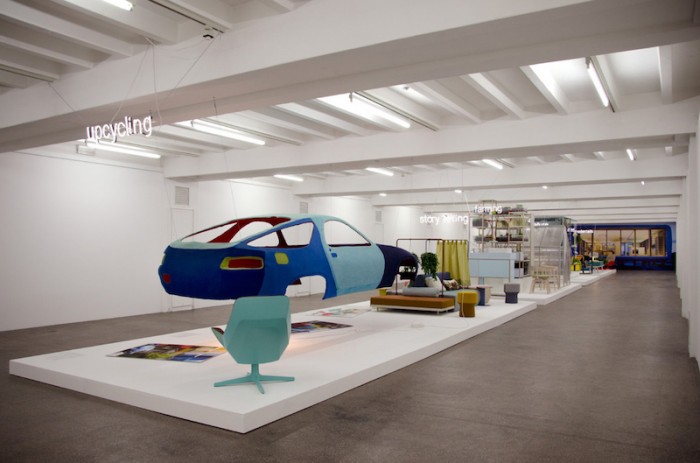
Cologne can be very drab in January. But it doesn't have to be. The Passagen provides a visual remedy every year with trendy interior design, presented everywhere throughout the city - in the middle of everyday life.
One might think that the Passagen must have been one of those ideas one has at an advanced hour with a glass of Kölsch. But no, organiser Sabine Voggenreiter says, laughing, this was not the case at the time. So it is not a world concept born at the bar, but the logical consequence of the trade so far. In the late 80s, Voggenreiter had already organised maker galleries and exhibitions on the theme of design in Cologne, such as Jasper Morrison's first ever show in Germany. They were exciting times – fuelled by the experimental "Neue Deutsche Design" and the geometric pastel orgies of "Memphis", an ever-wider public was getting interested in the topic. "This was a completely different scene from today," says Voggenreiter, who concluded from her work and experiences that she wanted to do much more.
Much more - that meant above all: concentration, as well as opening and simultaneously expanding. The International Furniture Fair (IMM), the concentration of furniture houses in the city, the universities and the Museum of Applied Arts Cologne (Makk) – that's what she built forth on. In 1990, Voggenreiter started the first edition of the Passagen with just 19 exhibitors. Even then, the concept was recognisably successful. Complementary and parallel to the IMM, which at that time exclusively presented furniture, the Passagen took place in shops, galleries and backyards in the inner city. "Spaces with atmosphere instead of functional exhibition halls or elaborate setups," says Sabine Voggenreiter, adding: "We didn't show only furniture or only dealers; we wanted to go crosswise". In addition to established furniture manufacturers and brands, the young talents and newcomers from the universities are also present; The Museum of Applied Art Cologne becomes a permanent venue.
Over the years the Passagen has developed into the largest German design festival with the most varying audience. In addition to experts, trade fair visitors, designers and journalists, interested locals also stroll through the 190 free exhibitions spread throughout the city of Cologne - "in the middle of everyday life," as Voggenreiter emphasises. This low-threshold is important to her, she wants to offer "design to touch". Through the use of empty halls and special venues, the Passagen also provides new perspectives on the city. The DQE hall in the Ehrenfeld design district, the former Helios factory and the Rheinau harbour, before being turned into a luxury district, were the venues in previous years. It is this mixture of Veedel (city quarter) cosiness and internationality that makes the Passagen so successful. And everything is on equal footing: a successful showcase of young designers in the backyard, has the same importance as the action of lighting designer Ingo Maurer, who once highlighted the entire hollow space of the Deutzer bridge with an elaborate lighting installation, which even made it to the title page of the New York Times.
For Sabine Voggenreiter, the encounters and the direct exchange on a personal level are just as important as the international attention. With the supplementary format Designers Fair, which has been designed and organised together with Heimatdesign from Dortmund since 2009, this exchange is also promoted. Small, regional design labels, such as kasch kasch from Cologne, Rohstoff-Design from Bottrop and fritz und Franken from Münster, can present themselves to a specialist audience and at the same time to international labels in a cool atmosphere. Design to touch.
Text: Volker K. Belghaus
Fotos: Wolfgang Burat